Wall Street Is Suddenly in Love with Gravel
Wall Street Is Suddenly in Love with Gravel
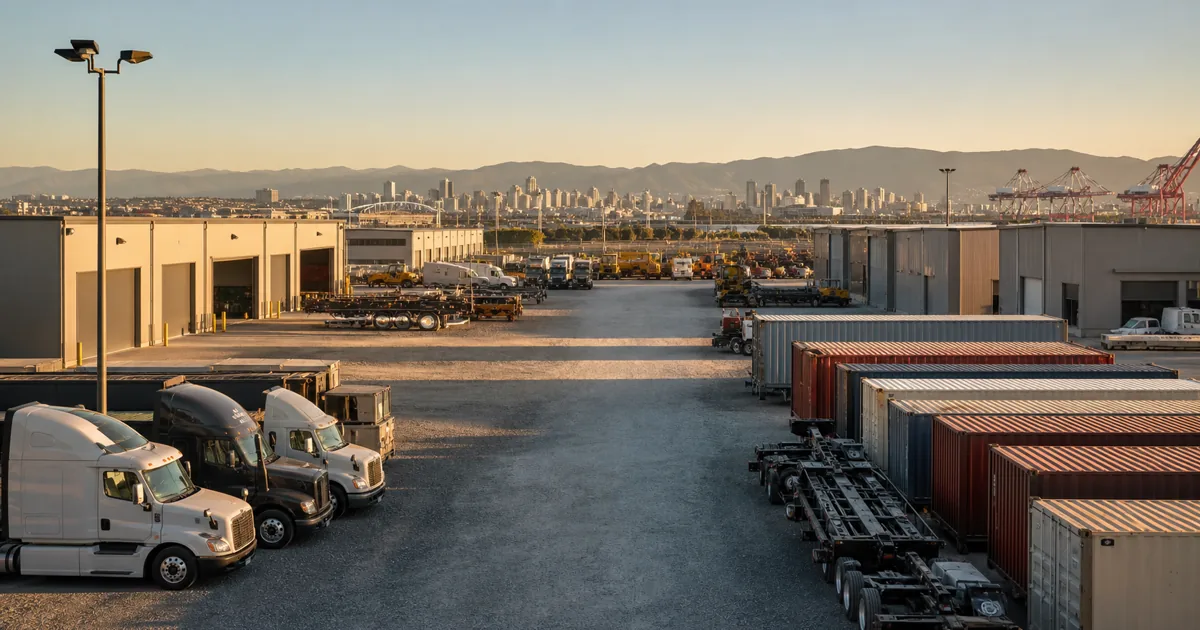
A few years ago IOS was the quiet corner of commercial real estate. Small operators picked up two to five acre sites near highways and leased them to truckers. The exit plan was simple: hold until the surrounding community got hot enough to flip into something shinier. That was then. Now the big firms are here. J.P. Morgan set up a 700 million dollar joint venture with Zenith IOS. Blackstone has committed 189 million alongside Alterra for 49 sites spread across 22 states. Alterra itself secured another 344 million from Truist and BMO to acquire 64 properties. Since 2021 institutional players have deployed more than 4.7 billion into IOS compared to less than 600 million in the entire five year stretch from 2015 to 2020. The driver today is artificial intelligence. Data centers are multiplying and each one needs nearby land to stage millions in tools, gear, and trailers. Gray Construction alone is working on 22 data centers. Their VP of data centers says every project requires adjacent storage space. That demand stacks on top of the existing e-commerce tailwind where goods leaving ports or factories make three to five stops before they ever reach a retailer. Every one of those stops creates IOS demand. The fundamentals are staggering. Rents for IOS have climbed 123 percent since 2020 while warehouse rents rose just 58 percent. Vacancy is sitting near 5 percent across an estimated 1.4 million acres nationwide. For context, that is roughly the land area of Delaware, and it is almost full. New supply is throttled by zoning boards and neighbors who simply do not like looking at gravel and trailers. So here we are. The capital markets are finally treating IOS like the scarce infrastructure it is. The cash flow story is real. The supply constraints are real. And the exit doors just widened for anyone holding portfolios big enough to sell into aggregation. The irony? Wall Street is not actually chasing gravel. They are chasing servers, semiconductors, and power plants. But to build those, you still need space to park trucks and stack equipment. IOS was always the backbone. Now it is just priced like one.